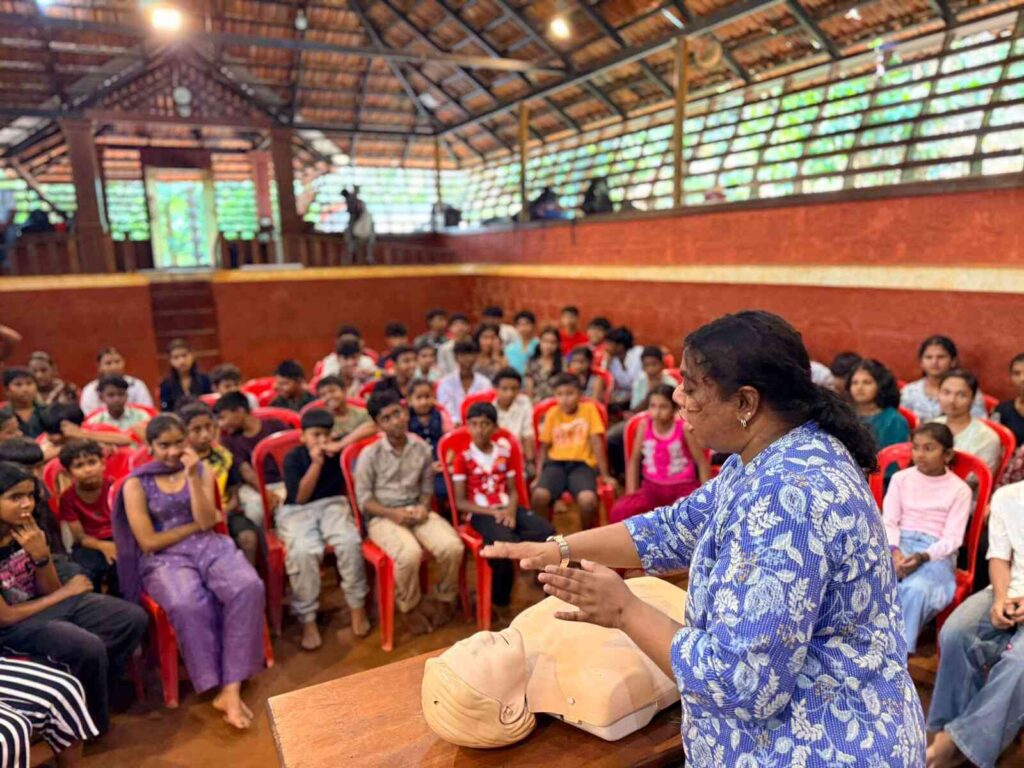
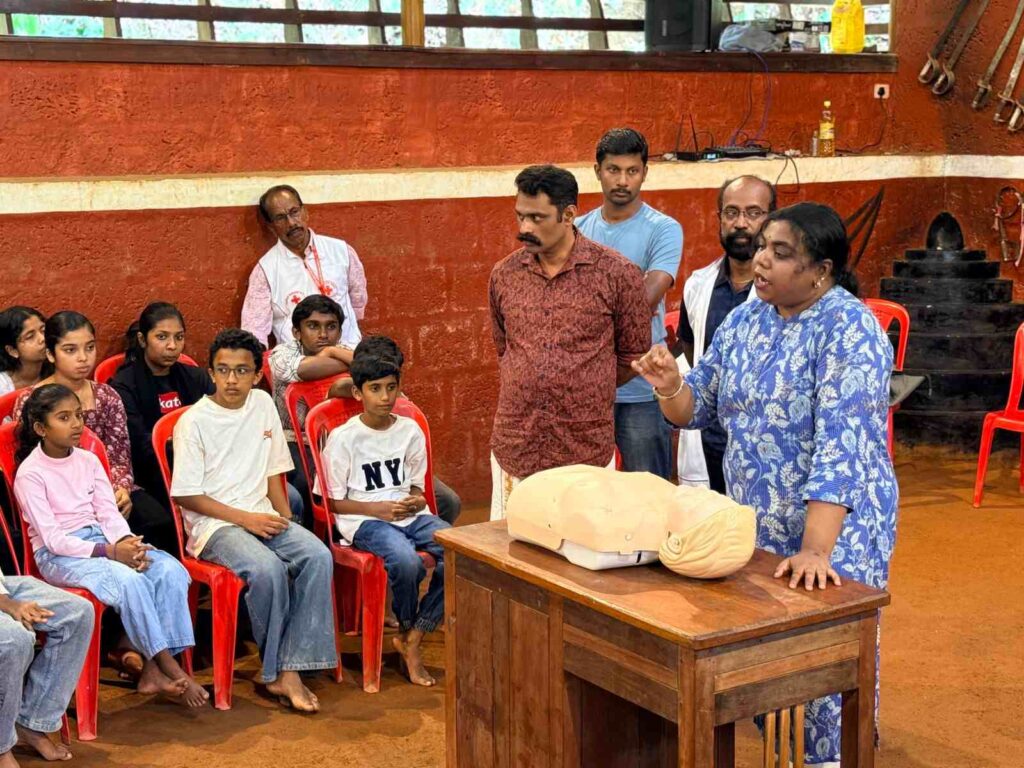
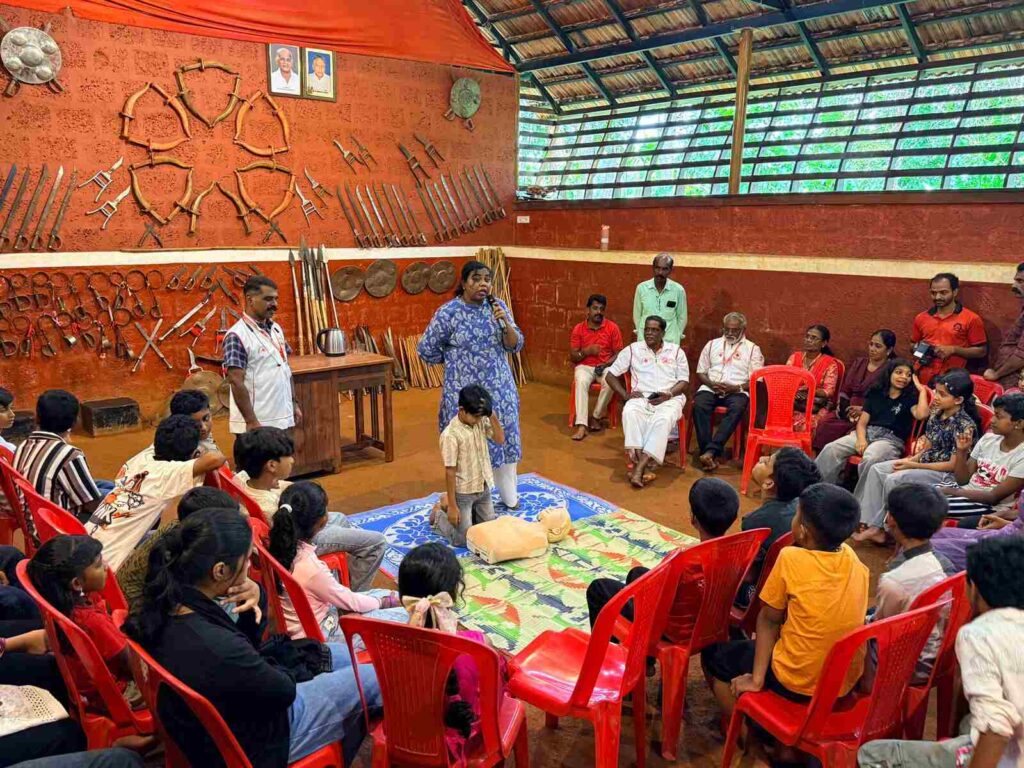
The rhythmic clashing of wooden staves, the disciplined alignment of mind and body, and the rich heritage of Kalaripayattu have long defined the training grounds of the Kadathanadan Kalari Foundation. However, recently, the traditional Kalari muttam (training courtyard) bore witness to a transformative new chapter in holistic youth development. In a landmark initiative designed to fuse ancient martial prowess with vital modern civic responsibilities, the foundation organized its inaugural First Aid Training Camp for young practitioners.
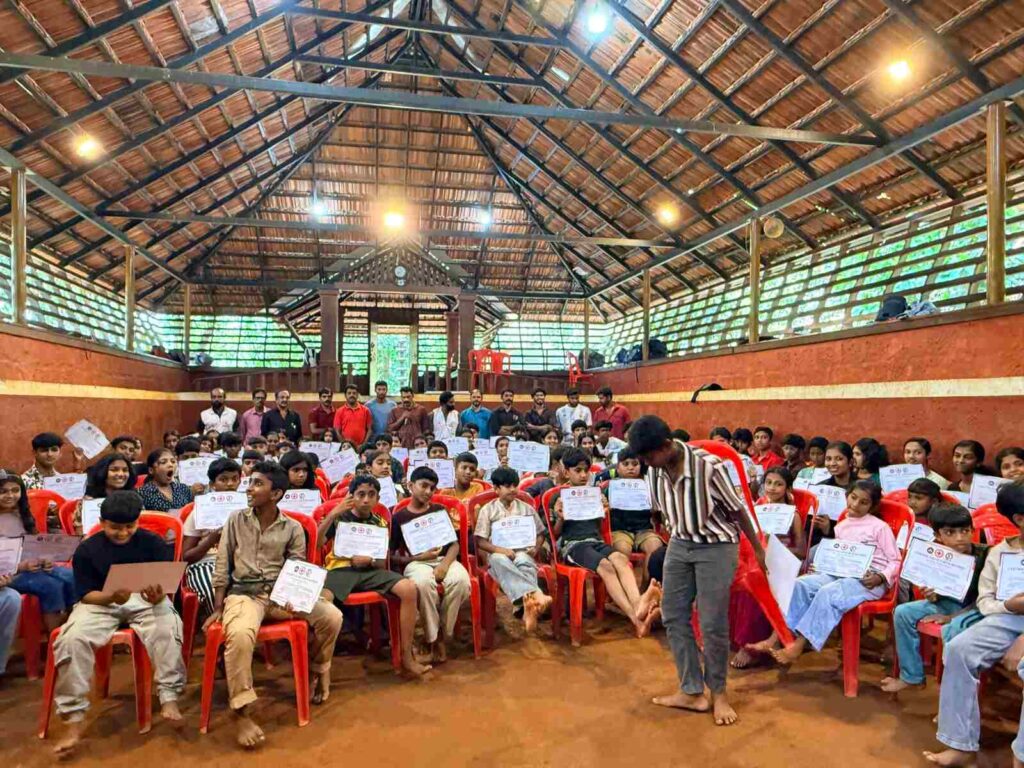
Conducted as a flagship event during the ongoing summer vacation camp, this unique program was organized in joint collaboration with the Buimerc India Foundation and received critical technical and training support from the Indian Red Cross Society (Wayanad Chapter). By blending the defensive reflexes of Kalaripayattu with life-saving medical emergency skills, the camp successfully transformed 150 young martial artists into responsible, agile, and prepared community first responders.
The Core Philosophy: Bridging Martial Arts and Humanitarian Care
For centuries, Kalaripayattu has been celebrated not merely as a system of combat, but as a comprehensive lifestyle guide that nurtures physical endurance, mental fortitude, and a deep-rooted respect for life. Traditional Kalari training inherently includes Marma Chikitsa—the ancient science of healing and manipulating vital pressure points.
By introducing contemporary First Aid and Basic Life Support (BLS) training to this curriculum, the Kadathanadan Kalari Foundation has modernized the traditional ethos of the martial artist. The objective is clear: a true warrior is defined not by the ability to inflict harm, but by the capacity to protect, heal, and preserve life.
“While martial arts strengthen the body and mind, knowledge of first aid becomes the power to save a life.”
This core sentiment echoed throughout the training ground, reminding the young participants that the ultimate application of their agility and discipline lies in serving their fellow human beings during critical hours of need.
Program at a Glance: Key Milestones
To ensure high engagement and focused mentoring, the program was carefully structured to cater to the specific developmental needs of adolescents.
| Program Parameter | Details |
| Organizing Body | Kadathanadan Kalari Foundation |
| Strategic & Financial Partner | Buimerc India Foundation |
| Training Partner | Indian Red Cross Society (Wayanad Chapter) |
| Target Audience Age Group | 10 to 16 years old |
| Total Attendance | 150 students |
| Core Focus Modules | CPR, Wound Management, Emergency Composure, Injury Care |
Inside the Classroom: Practical Life-Saving Skills with Dr. Anamika
The training sessions were spearheaded by Dr. Anamika, a highly distinguished consultant renowned for her expertise in emergency medicine and community health education. Recognizing that emergency medical concepts can sometimes intimidate young minds, Dr. Anamika structured her modules around interactive, age-appropriate, and highly practical demonstrations.
The curriculum was broken down into three fundamental pillars:
1. Cultivating Psychological Composure in Crises
The first hurdle in any emergency is panic. Dr. Anamika taught the children how to manage their initial adrenaline surge when witnessing an accident. Through situational role-play, the children learned the “Check-Call-Care” protocol, understanding how to assess a scene for safety, alert adult authorities or medical services systematically, and step in to assist without causing further danger to themselves or the victim.
2. Demystifying Cardiopulmonary Resuscitation (CPR)
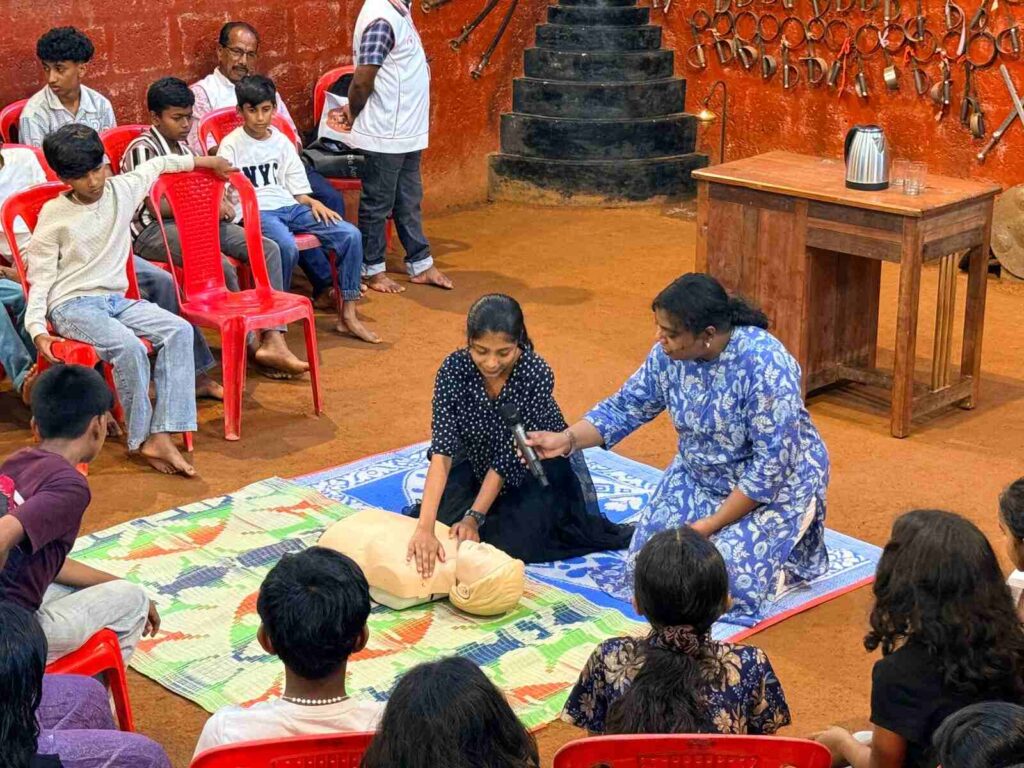
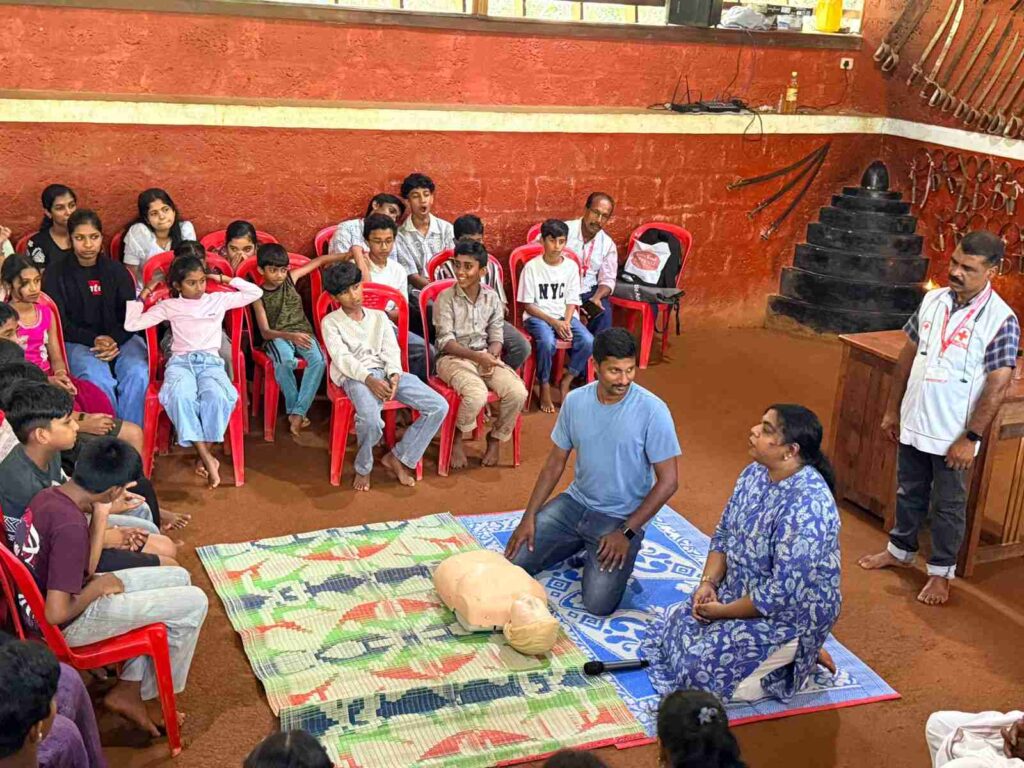
The highlight of the camp was the hands-on Cardiopulmonary Resuscitation (CPR) module. Using medical training mannequins, every child aged 10 to 16 was given the opportunity to practice chest compressions and rescue breaths. Dr. Anamika meticulously guided them on:
- Locating the correct hand placement on the sternum.
- Maintaining the optimal depth and rhythm of compressions (mimicking the globally recognized 100 to 120 beats per minute tempo).
- Understanding the critical differences between administering CPR to adults versus peers.
3. Advanced Trauma, Bleeding, and Fracture Management
Given that these children actively practice high-intensity martial arts, learning how to manage musculoskeletal injuries was highly relevant. The Red Cross team and Dr. Anamika demonstrated:
- Hemostasis: How to apply direct pressure and sterile bandages to control severe bleeding.
- Immobilization: Using improvised splints and slings (such as triangular bandages or clean cloth) to secure fractured limbs or severe sprains before professional medical help arrives.
- Minor Injury Care: The right way to clean abrasions, soothe contusions, and handle minor burns or heat exhaustion—frequent occurrences during hot summer sports camps.
A Collaborative Ecosystem of Social Good
An initiative of this magnitude requires seamless synergy between cultural institutions, corporate philanthropy, and humanitarian organizations. The success of this First Aid camp serves as a model framework for community-level youth empowerment.
Kadathanadan Kalari Foundation
As the host and visionary behind the camp, the foundation continues to push the boundaries of traditional sports academies. By looking beyond physical training to encompass civic and health literacy, the foundation is redefining what it means to run a modern cultural academy in Kerala.
Buimerc India Foundation
Great visions require stable foundations, and the Buimerc India Foundation served as the financial backbone of this entire enterprise. Through their generous sponsorship and structural support, the camp was made entirely accessible to the 150 young attendees, ensuring that top-tier medical training resources, emergency kits, and training materials were made available without any financial burden on the families.
Indian Red Cross Society
Bringing global standards of disaster relief and first-aid training to the grassroots level, the Wayanad Chapter of the Indian Red Cross Society ensured that the certifications and techniques imparted were medically accurate, legally compliant, and up-to-date with international life-saving guidelines.
Leadership and Visionary Guidance
The smooth execution of the camp was overseen by an esteemed panel of community leaders, martial arts masters (Gurukkals), and social activists who gathered to inspire the young cohort.
- Official Red Cross Representation: The camp received official patronage from the Indian Red Cross Society Wayanad chapter, led by Vice President Thankachan. Alongside him, senior and highly active Red Cross members Johnson, Thomas, Baby, Rajesh, and Ashokan stayed on-site throughout the day, supervising practical drills and lending their extensive field experience to the young trainees.
- The Pillars of Kadathanadan Kalari: The management and tactical execution of the event were handled internally by the leadership of the Kalari Foundation. Managing Director K.F. Thomas Gurukkal provided overarching leadership, ensuring the alignment of daily Kalari routines with the medical camp schedule.
- Supervisory Excellence: The camp’s logistical success was further guaranteed by the active supervision of senior masters M. S. Ganesh Gurukkal, K. K. Sajeev Gurukkal, and T. N. Nishad Gurukkal. Their presence underscored the value that the traditional leadership places on modern life skills, bridging the generational gap with common humanitarian goals.
The Broader Impact: Creating a Chain of Community Resiliency
By educating 150 children, the Kadathanadan Kalari Foundation has effectively placed 150 emergency responders across various households, neighborhoods, and schools in the region. Children within the 10 to 16 age bracket are uniquely positioned to act as rapid conduits of information. They spend significant time in community spaces, playgrounds, and schools where minor injuries and emergencies are frequent.
Equipping them with the ability to distinguish a minor bruise from a life-threatening fracture, or teaching them how to keep a cardiac arrest patient viable through CPR while an ambulance navigating traffic makes its way to the location, creates a profound layer of decentralized safety within society.
Looking Forward: The Vision for Holistic Youth Development
As the camp concluded, the atmosphere at the Kadathanadan Kalari Foundation was filled with a newfound sense of pride and responsibility. The young students marched out of the Kalari muttam not just with sharper defensive stances and improved physical agility, but with the profound internal confidence that they possess the knowledge required to save a human life.
This First Aid training camp is just the beginning. The management of the Kadathanadan Kalari Foundation has re-affirmed its commitment to introducing more multifaceted programs in the coming days. Future iterations of the summer vacation camp will continue to introduce varied skill sets—ranging from environmental conservation awareness to mental health resilience and digital literacy—ensuring that every child who steps through their gates emerges as a balanced, healthy, and highly capable pillar of the future global community.
Join Our Movement
Are you interested in enrolling your child in our holistic development programs, or would you like to partner with the Kadathanadan Kalari Foundation for community health and safety drives?
- Keep an eye on our Program Page for upcoming seasonal camps, daily Kalaripayattu batches, and specialized community workshops. Together, let us build a generation that is strong in body, calm in mind, and compassionate in action!